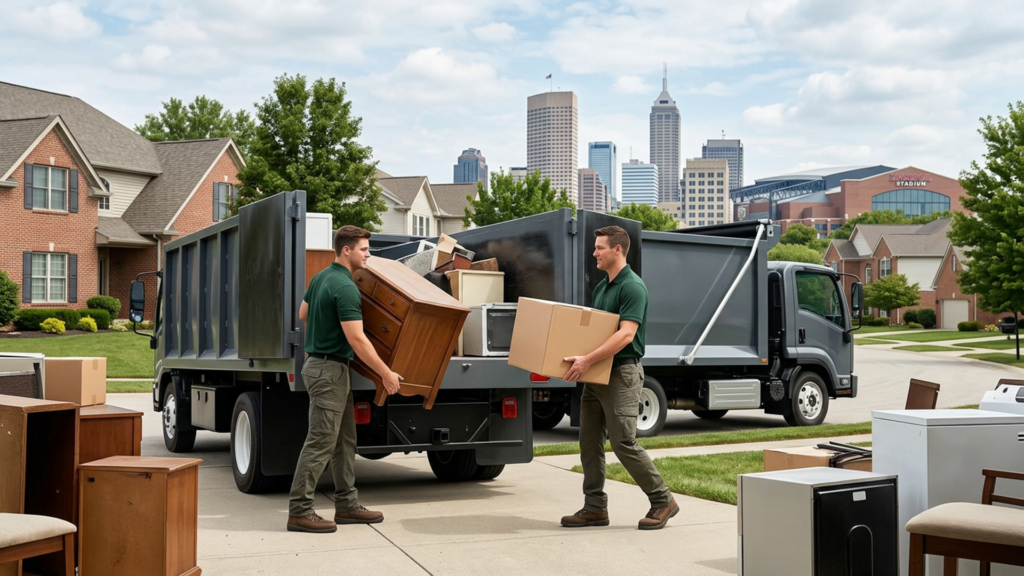
You watched the truck pull away with your old couch, broken appliances, and boxes of who-knows-what — but then what? Most people never think about what happens next, and junk removal companies aren’t always eager to explain. The truth is more complicated (and more interesting) than you’d expect, involving sorting facilities, recycling markets, donation networks, and yes, landfills. Here’s a transparent, no-spin look at the full journey your junk takes after pickup — and how to make sure it’s handled responsibly.
What Actually Happens to Your Junk Right After the Truck Leaves?
The First Stop: Transfer Stations and Sorting Facilities
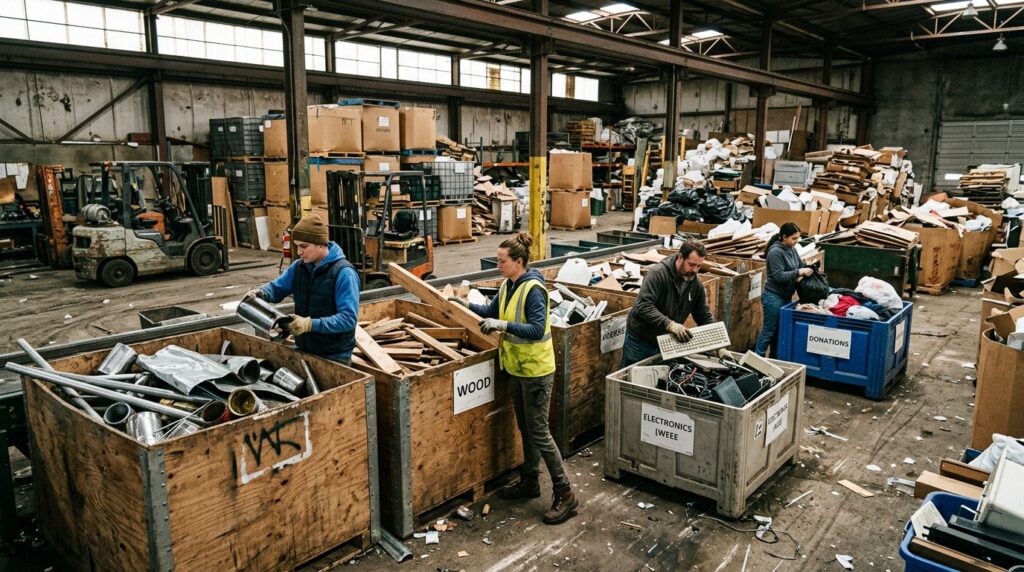
Junk rarely goes straight to a landfill. Most reputable companies bring loads to a transfer station or their own sorting warehouse first, where crews separate items into broad categories: donatable, recyclable, hazardous, and landfill-bound.
Junk removal companies with genuine eco commitments invest significant time and labor at this stage — it’s where responsible disposal either begins or fails. The companies that skip this step are the ones you should worry about.
The Sorting and Categorization Workflow
Wood, cardboard, metal, plastic, and glass get separated into dedicated streams for recycling processors. Reusable items like furniture, clothing, toys, books, and small appliances are identified and set aside for donation partners.
Items requiring special handling — electronics, refrigerants, batteries, paint — are flagged and routed to certified disposal channels. This triage process is the backbone of responsible junk removal.
What Sorting Looks Like for Specific Items
Different items follow very different paths. Mattress disposal involves breaking them down into steel springs (recycled), foam (sometimes recycled, often landfilled), and fabric (typically landfilled). Appliances and refrigerators require refrigerant recovery before their metal can be recycled.
TV and e-waste disposal addresses hazardous materials like lead and mercury that mandate certified processing. And construction debris like concrete, wood, and drywall each follow entirely different recycling or disposal paths.
Where Do Donated and Reusable Items End Up?
Donation Partnerships and How They Work
Reputable junk removal companies partner with local charities, thrift stores, shelters, and nonprofit organizations to divert usable goods from landfills. Items like furniture, working appliances, and household goods are delivered to these partners — sometimes the same day as pickup.
Some companies provide donation receipts to customers, which double as proof that items were actually diverted rather than quietly dumped.
Repurposing, Creative Reuse, and the Circular Economy
Architectural salvage shops, community workshops, and maker spaces accept materials like lumber, hardware, and vintage fixtures. The circular economy model emphasizes keeping materials in use as long as possible — your old dresser becoming someone’s first apartment furniture is the system working exactly as intended.
The community impact is real. Local donation keeps goods in your area, supports neighbors in need, and reduces transportation emissions compared to long-haul recycling.
How Much of Your Junk Actually Gets Recycled — And How Much Doesn’t?
Real Recycling Rates vs. the Marketing Story
The EPA reports a national recycling rate around 32%, but for mixed junk removal loads, actual diversion rates vary wildly by company and region. Single-stream recycling — where all recyclables go in one bin — leads to significant contamination, and one contaminated item can ruin an entire load.
The hard truth is that U.S. recycling infrastructure is genuinely broken in many areas. Honest companies acknowledge this rather than promising 100% diversion.
Scrap Metal: The Recycling Bright Spot
Metals are the most reliably recycled material because they retain real market value. Steel, aluminum, copper, and brass from appliances, furniture frames, and construction debris are almost always recovered.
Metal recycling has a well-established infrastructure and commodity market, making it economically self-sustaining — unlike paper, plastic, or glass recycling, which often operate at a loss.
What Happened When Global Recycling Markets Collapsed
In 2018, China’s National Sword policy banned most foreign recyclable imports, devastating U.S. recycling programs overnight. Many communities began landfilling recyclables they previously exported, and some junk removal companies quietly followed suit.
Recycling viability now depends heavily on local infrastructure, current commodity prices, and whether domestic processing capacity exists in your region.
Why Do Some Companies Choose Landfill Over Recycling?
The $208 Billion Economics Behind Disposal Decisions
The North American waste management industry exceeds $208 billion. Landfills are profitable businesses, not just dumping grounds. Recycling costs money — sorting labor, transportation to processors, contamination losses — while landfill tipping fees can be cheaper in many regions.
When commodity prices for recycled materials drop, the financial incentive to recycle disappears, and more material gets landfilled regardless of company promises.
Hazardous Waste: When Special Disposal Is Non-Negotiable
Items like paint, solvents, batteries, fluorescent bulbs, and electronics contain materials that are regulated under hazardous waste guidelines and cannot legally go to standard landfills. Certified hazardous waste handlers process these items through neutralization, incineration, or specialized containment.
Waste-to-energy incineration converts some non-recyclable waste into electricity, though it remains controversial due to emissions concerns.
Landfill as the Honest Final Destination
After sorting, donating, and recycling everything viable, some percentage of every junk load ends up in a landfill — that’s simply the reality of trash disposal. Modern landfills are engineered with liners, leachate collection, and methane capture systems. They’re not the open dumps of decades past.
A trustworthy company will tell you their actual landfill diversion rate rather than implying everything gets recycled.
How Can You Tell If a Junk Removal Company Is Actually Eco-Friendly?
A Practical Vetting Checklist
Ask for specific diversion rates and what percentage of collected junk goes to landfill. Vague answers like “we recycle everything we can” are a red flag. Request donation receipts or documentation showing where items were delivered.
Check for partnerships with named recycling facilities, donation centers, or certified e-waste processors — not just generic claims on a website.
Red Flags and the Illegal Dumping Problem
Investigative reports have documented junk removal companies illegally dumping collected items on roadsides, vacant lots, and unauthorized sites. Warning signs include unusually low prices, no physical business address, lack of licensing or insurance, and refusal to explain their disposal process.
If you spot illegal dumping, report it to your local code enforcement or environmental agency — it’s a crime that harms communities and ecosystems. Learn more about our approach and commitments to responsible disposal.
Protecting Your Privacy During Junk Removal
Personal documents, old mail, financial records, and medical paperwork mixed into junk loads create real identity theft risks. Always shred or remove sensitive documents before any pickup — don’t assume the crew will handle them securely.
If you accidentally include personal items, contact the company immediately. Reputable operators will work with you to retrieve or destroy them.
What Are Your Alternatives to Hiring a Junk Removal Service?
DIY Disposal Options and Cost Comparisons
Municipal landfill drop-offs often cost as little as $16–30 per load — a fraction of full-service junk removal pricing. Many cities offer free annual bulk pickup days or scheduled curbside collection for large items.
Reducing waste at the source through mindful purchasing, repair, and resale on platforms like Facebook Marketplace or Craigslist keeps items out of the waste stream entirely.
Taking Personal Responsibility for the Item Lifecycle
Research local recycling and donation options for specific items before defaulting to a single junk removal call — city-specific disposal resources can help you find the right channels. Separate your own junk into donate, recycle, hazardous, and trash categories to make any disposal method more effective.
For specialty items like mattress disposal in Bloomington or refrigerator disposal in Columbus, local services may offer targeted, more affordable solutions than a general hauling company.
So What’s the Bottom Line — Can You Trust the Junk Removal Process?
Responsible junk disposal is real, but it’s not magic. It depends on the specific company, local infrastructure, current recycling markets, and the types of items in your load. The best outcomes happen when both customers and companies take responsibility: you sort and remove sensitive items, they invest in genuine sorting, donation, and recycling partnerships.
Transparency is the single best indicator of a trustworthy company. If they’ll tell you the hard truths about what gets landfilled, they’re probably doing the right thing with everything else.
Ask questions, request documentation, and don’t be afraid to compare companies on their actual practices rather than just price. Understanding reverse logistics in recycling helps you appreciate why this process is complex and why cutting corners is tempting for less scrupulous operators.
Your junk doesn’t disappear. But with the right company and a little due diligence, most of it can find a second life — or at least reach its end responsibly. One helpful overview of what happens after junk pickup walks through how a single hauler handles this process from start to finish, illustrating the steps involved in diverting materials from landfills. Similarly, educators have developed lesson plans about trash and recyclables that break down the same journey in a way that’s accessible for communities trying to understand the system.