
Moving is the perfect opportunity to lighten your load and start fresh — but figuring out what stays, what goes, and what gets donated can feel overwhelming. A clear decluttering plan not only reduces moving costs and saves time on packing day, but it also ensures your belongings end up where they’ll do the most good. This room-by-room checklist breaks down exactly what to keep, donate, and throw away so you can move into your new home with only the things that truly matter.
Why Should You Declutter Before Moving Day?
Lower Moving Costs and Save Time
Every box you pack costs money to move. Fewer boxes and less weight directly reduce moving truck fees and labor costs, sometimes by hundreds of dollars. When you eliminate unnecessary items first, packing and unpacking take significantly less time — and a streamlined inventory makes it far easier to organize and label boxes accurately.
Think of it this way: the average American household contains over 300,000 items. Even cutting 10–15% of that before a move translates to fewer trips, fewer boxes, and a faster transition into your new space. Resources like this guide on what to do with your stuff when moving can help you think through your options systematically.
Reduce Stress and Start Fresh
Clutter contributes to decision fatigue, and the last thing you need during an already chaotic process is a pile of “maybe” items staring you down at midnight before the movers arrive. Tackling decluttering early prevents last-minute panic and gives you a genuine sense of control.
Moving with only items you love and use sets the tone for maintaining an organized new home from day one. According to a Columbia College guide on decluttering, reducing physical clutter can also reduce mental clutter, improving focus and overall well-being.
Environmental and Community Benefits
Donating usable items keeps them out of landfills and supports local families in need. Responsible disposal of electronics, appliances, and hazardous materials protects the environment, and these tips for sustainably decluttering offer practical ways to keep harmful substances out of soil and water systems.
Recycling and repurposing align with EPA waste reduction guidelines that benefit your entire community. When you declutter thoughtfully, you’re not just helping yourself — you’re making a measurable difference.
What Is the Best Room-by-Room Declutter Before Moving Checklist?
Kitchen and Pantry Sorting
-
Keep: Daily-use cookware, matching dish sets, specialty appliances you use weekly, unexpired pantry staples
-
Donate: Duplicate utensils, gadgets still in packaging, extra dish sets, small appliances in working condition you rarely touch
-
Throw away: Chipped or cracked dishes, expired food and spices, melted or warped plastic containers with missing lids, worn-out sponges and towels
Before packing bulky items like stand mixers or bread machines, consider whether your new kitchen layout can actually accommodate them. If that waffle maker has been collecting dust for two years, it’s time to let it go.
Bedroom and Closet Purge
-
Keep: Clothing that fits, flatters, and has been worn in the past year; sentimental jewelry; quality bedding in good condition
-
Donate: Clothes in good shape that no longer fit or match your style, extra linens and pillows, gently used shoes
-
Throw away: Stained or torn clothing beyond repair, worn-out mattresses and pillows past their lifespan, broken hangers and accessories
Old mattresses are bulky, heavy, and difficult to maneuver through doorways — scheduling mattress disposal services means you don’t have to wrestle a king-size down three flights of stairs.
Living Room and Common Areas
-
Keep: Furniture that fits the new space and is in solid condition, meaningful décor, functional electronics
-
Donate: Books you’ve already read, DVDs and media you’ve digitized, accent furniture that won’t fit the new layout
-
Throw away: Broken remotes, tangled cords for devices you no longer own, damaged or heavily stained upholstery
For large pieces you’re parting with, furniture removal services can simplify the process, especially when you’re dealing with heavy sectionals or outdated entertainment centers.
Bathroom and Linen Closet
-
Keep: Current prescriptions, daily-use toiletries, fresh towels in good condition, first-aid essentials
-
Donate: Unopened and unexpired beauty products, surplus towels and washcloths, unused grooming tools
-
Throw away: Expired medications (return to a pharmacy for safe disposal), dried-out cosmetics, rusty razors, half-empty bottles of products you dislike
Most beauty products have a shelf life of 6–12 months after opening. If you can’t remember when you opened it, toss it. That goes double for sunscreen, which loses effectiveness over time and could give you a false sense of protection.
How Do You Decide What to Keep, Donate, or Throw Away?
The One-Year Rule and Other Decision Frameworks
If you haven’t used, worn, or thought about an item in the past 12 months, it’s a strong candidate for removal. Ask yourself: “Would I buy this again today?” If the answer is no, let it go.
Using the keep, toss, or donate framework to create three clearly labeled sorting zones in each room keeps the process moving and prevents the dreaded “undecided” pile from growing out of control. For sentimental items, consider photographing them to preserve the memory without keeping the physical object.
Evaluating Condition and Functionality
Items in good working condition with cosmetic wear are perfect donation candidates — that slightly scuffed end table still has years of life left in someone else’s home. The NEA offers a helpful breakdown of what to keep and what to throw away that can guide decisions about worn or outdated items.
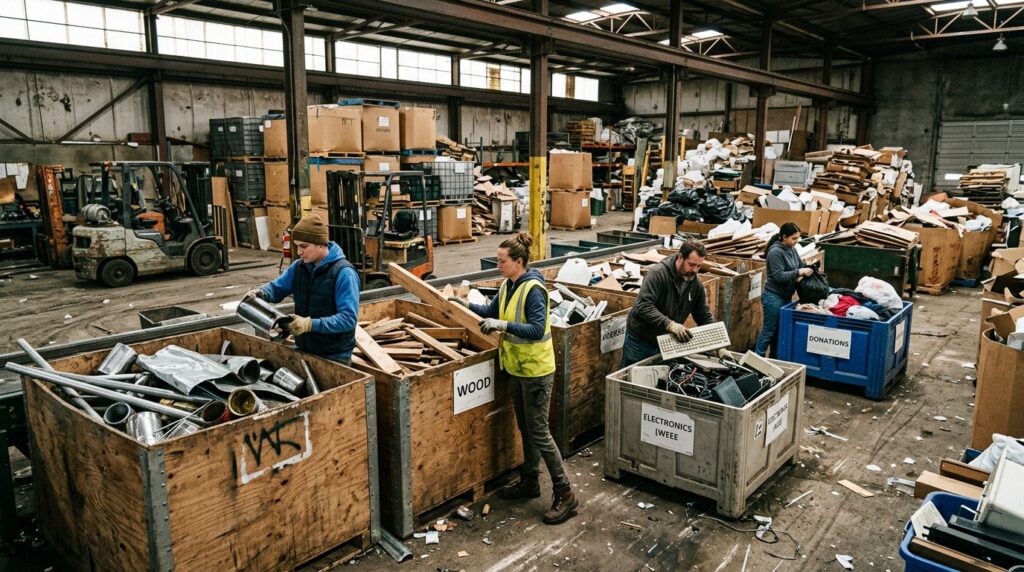
Electronics that still power on can often be donated to schools or community organizations, but non-functional devices need proper TV and e-waste disposal to prevent toxic materials like lead and mercury from entering the waste stream.
Handling Sentimental and High-Value Items
Sentimental items are the hardest category to sort, and that’s completely normal. Limit sentimental keeps to one dedicated box or bin per family member to prevent emotional hoarding from derailing your progress.
Get valuable items like antiques, jewelry, or collectibles appraised before deciding to donate or sell. Digitize photos, children’s artwork, and paper documents to preserve memories without the physical bulk — a single USB drive can hold thousands of images that would otherwise fill multiple moving boxes.
What Are the Best Ways to Donate, Sell, and Dispose of Unwanted Items?
Where and How to Donate
Habitat for Humanity ReStores accept furniture, appliances, and building materials — you can check their donation guidelines to confirm what your local store takes. Schedule donation pickups from organizations like Goodwill, Salvation Army, or local shelters at least two weeks before your move to avoid last-minute scrambling.
Keep a running list and receipts for all donated items to claim a tax deduction at year-end. Many communities also have “buy nothing” groups on social media where neighbors can claim items for free, which is a fast and feel-good way to rehome things.
Selling Items for Extra Moving Cash
List high-value items on Facebook Marketplace, Craigslist, or OfferUp at least 4–6 weeks before moving day to give yourself enough time to find buyers. Host a moving sale or garage sale two weekends before the move to clear large volumes quickly.
Price items to sell — the goal is to move them out, not maximize profit under time pressure. Reviewing a spring cleaning guide on sorting belongings can help you decide which items are worth listing versus simply giving away. That treadmill collecting laundry in the spare room is worth more at $50 out the door than $200 sitting in your new garage.
Responsible Disposal and Recycling
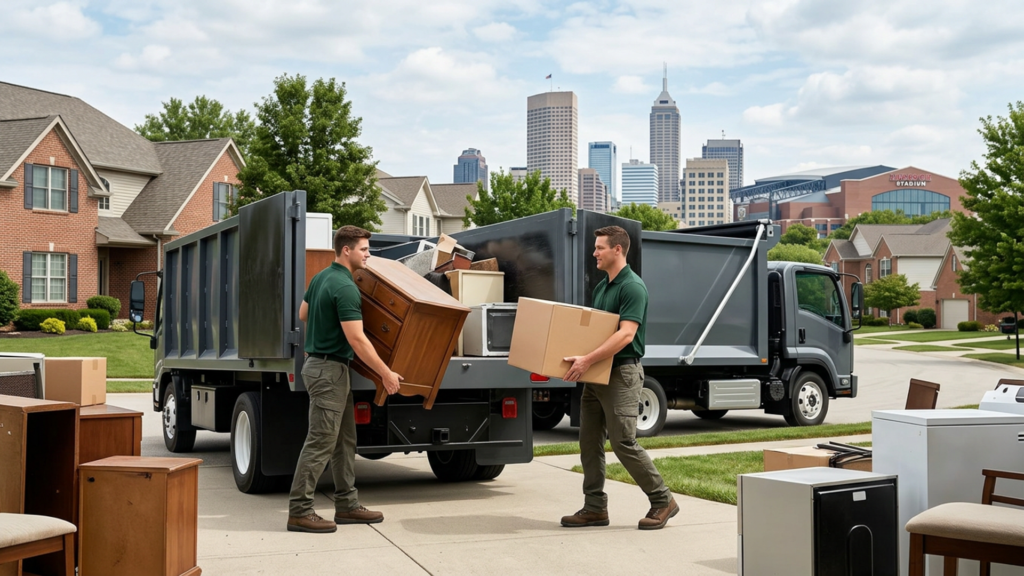
Old refrigerators and large appliances often contain refrigerants that require professional appliance removal for safe, legal disposal — you can’t simply leave them on the curb. For those in central Indiana dealing with older units, junk removal in Whiteland is one example of how localized services handle these items properly.
Hazardous materials like paint, batteries, and chemicals must go to designated drop-off facilities — never in regular trash. For large-scale cleanouts, a full-service junk removal team can sort, haul, and responsibly dispose of everything in a single visit, saving you multiple trips to different facilities.
How Should You Tackle Special Spaces Like Garages, Storage Units, and Estates?
Garage and Shed Decluttering
Sort tools, sports equipment, and seasonal gear into keep, donate, and toss piles — duplicates and rusted tools go first. Properly dispose of old paint cans, pesticides, motor oil, and other hazardous materials at community collection events.
Professional garage cleanout services are a practical option when years of accumulation make DIY sorting impractical. Before deciding which large items like workbenches or riding mowers to bring along, measure your new garage or storage space to make sure they’ll actually fit.
Storage Unit and Apartment Cleanouts
If you’re paying for a storage unit, audit every box honestly. As AARP’s decluttering tips point out, items forgotten in storage are almost always safe to donate or discard — if you haven’t needed them in months or years, you won’t miss them.
Scheduling storage unit cleanouts can help you empty the space quickly and stop those monthly rental payments before your move. For renters leaving an apartment, a thorough apartment cleanout ensures you get your security deposit back by leaving the space spotless. Tackle these spaces first in your timeline since they’re separate from your daily living and won’t disrupt your routine.
Estate and Whole-Home Cleanouts
If you’re downsizing from a family home or managing a loved one’s estate, the volume of belongings can be emotionally and physically overwhelming. Enlist family members early to claim heirlooms and sentimental items before the bulk sorting begins.
Estate cleanout services provide compassionate, efficient clearing of an entire home — including sorting, hauling, and donation coordination. Create a simple spreadsheet to track where items go (kept by family, donated, sold, or disposed) for transparency and record-keeping among all involved parties.
What Does a Pre-Move Decluttering Timeline Look Like?
6–8 Weeks Before the Move
Walk through every room and identify obvious items to remove — anything broken, expired, or clearly unwanted goes immediately. Begin sorting one room per weekend using the keep/donate/toss system to avoid burnout.
Research local donation centers, schedule pickups, and list high-value items for sale online. Starting early gives you the luxury of making thoughtful decisions rather than frantic ones.
3–5 Weeks Before the Move
Now it’s time to tackle specialty areas: the garage, attic, basement, and storage units. Drop off or schedule pickup for all donation items, and follow up on online sale listings — lower prices if needed to keep things moving.
Arrange junk removal for large items, e-waste, and anything that can’t go in regular trash. This is also the window to handle hazardous materials and schedule any professional services you’ll need.
Final 1–2 Weeks Before the Move
Do a final sweep of every room, closet, and drawer — this is your last chance to lighten the load. As this WVU Extension resource on clutter explains, holding onto items “just in case” is one of the most common reasons clutter follows people from home to home.
Confirm all disposal and donation pickups are complete so moving day focuses solely on loading and transporting your keepers. The goal is a clean, efficient moving day with zero surprises.
Ready to Start Your Declutter Before Moving Checklist?
Commit to the Process Early
The earlier you start, the less rushed and more intentional every decision will be. Use this checklist as a printable guide — check off rooms and categories as you complete them.
Remember that every item you remove is one less thing to pack, carry, and unpack. That simple math adds up to real savings in time, money, and energy.
Get Help When You Need It
Decluttering an entire home is a big job — don’t hesitate to call in reinforcements from friends, family, or professionals. For large-scale removal of furniture, appliances, electronics, and general clutter, a junk hauling service handles the heavy lifting so you can focus on your fresh start.
Moving should feel like a new beginning, not a burden. A thorough declutter is the single best way to make that happen — and with this checklist in hand, you have everything you need to get started today.