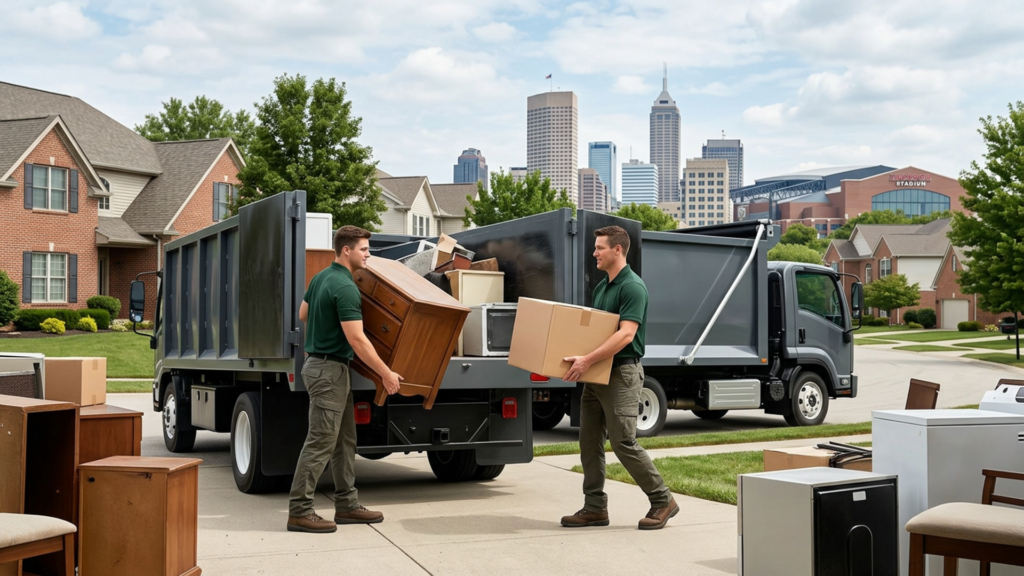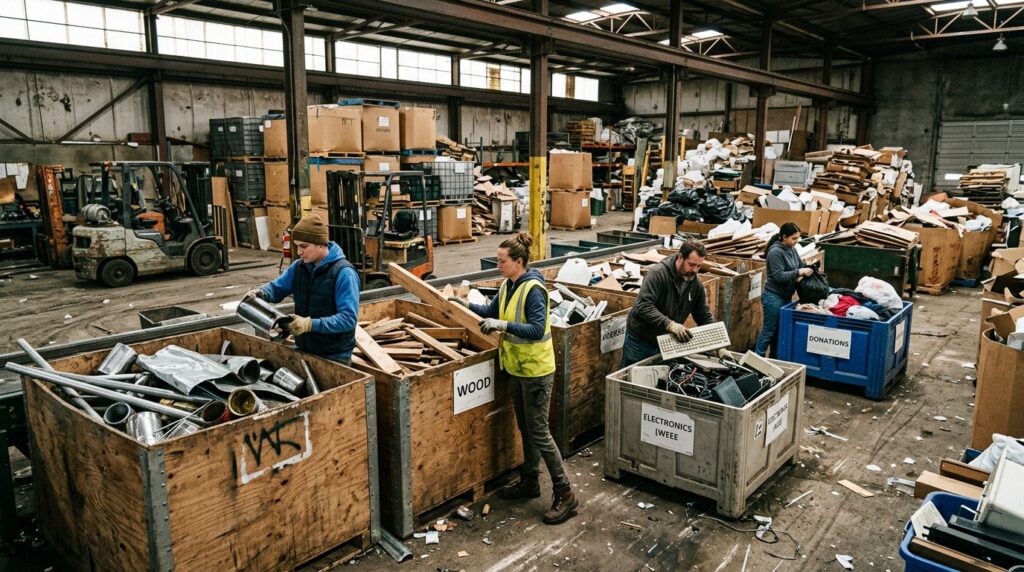
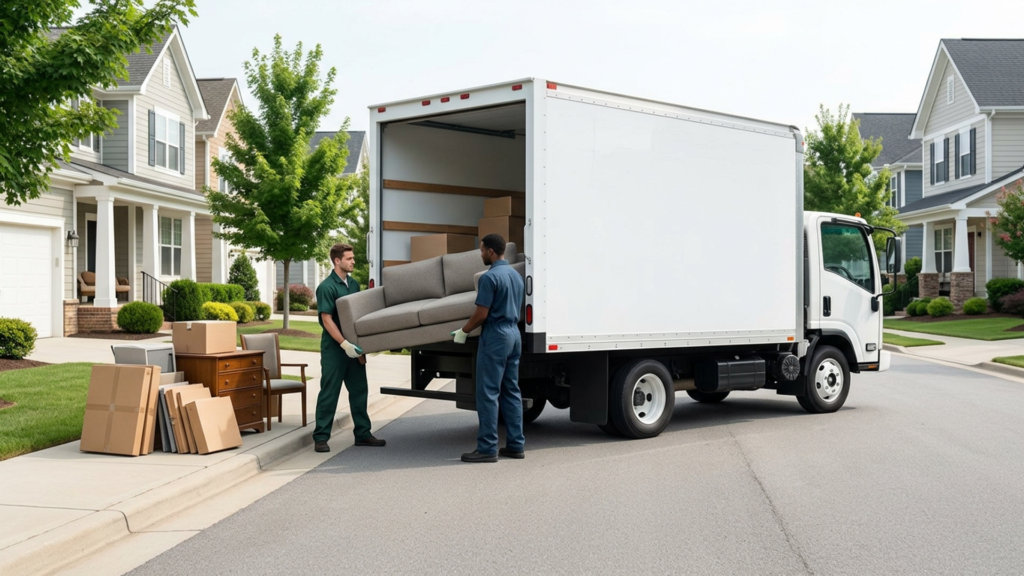
If you’re a Columbus, Indiana resident planning a big cleanout, understanding the city’s bulk pickup rules before dragging items to the curb can save you major headaches. The city offers bulk collection services, but there are strict limits on what they’ll take, how much they’ll haul, and how items must be prepared. This guide breaks down everything—from scheduling and item limits to the complete list of things the city will leave behind—plus smart alternatives when bulk pickup isn’t an option.
How Does Columbus Indiana Bulk Pickup Work and Who Is Eligible?
Eligibility for Single-Family Homes vs. Apartments
Single-family residential households within Columbus city limits are generally eligible for bulk curbside pickup services. However, apartment complexes and multi-family units are often not serviced by the city’s bulk program—waste management for those properties is typically handled by the property owner or a private hauler.
If you’re a renter in a single-family home, confirm eligibility with your landlord or the city, since the service is tied to the residential address. Apartment residents who need large-scale disposal can look into junk removal in Columbus as a reliable alternative.
How to Schedule Bulk Pickup Through 311
Call Columbus 311 or use the city’s online service portal to submit a bulk pickup request. Reddit users consistently praise 311 for fast response times, with crew dispatches often arriving within a week. Be prepared to describe the items, quantity, and approximate size when scheduling.
You’ll receive confirmation with a pickup date. Placing items at the curb before your scheduled date may result in code violations, so wait until you have the green light. Keep the 311 number handy for follow-ups or if items aren’t collected on the scheduled day.
The Automated Toter Collection Program
Columbus uses an automated toter (cart-based) system for regular weekly trash and recycling collection. All waste for standard pickup must fit inside the city-issued toter with the lid fully closed. Items that don’t fit in the toter are exactly what trigger the need for bulk pickup scheduling. Similar to Anne Arundel County’s curbside collection program, these toter guidelines align with cart-based systems adopted by municipalities nationwide to improve efficiency and reduce litter.
What Are the Item Limits and Size Restrictions for Bulk Pickup?
Number of Items Allowed Per Pickup
The city typically limits bulk pickup to a set number of items per request—often 4 to 6 large items per scheduled collection. Exceeding the item limit may result in leftover items sitting at the curb, requiring a second request or alternative disposal.
Bundled items (like lumber or branches) may count as one item if properly tied and within size limits. Always confirm exact item count limits when scheduling through 311, as limits can change seasonally.
Size, Weight, and Preparation Requirements
Individual items generally must be manageable for a two-person crew. Excessively heavy items—think pianos or cast iron tubs—may be refused outright. Furniture should be disassembled when possible to reduce size and ease collection, and you should remove doors from cabinets and drawers from dressers.
Bundle loose materials like wood or trim into tied bundles no longer than 4 feet and under 50 pounds. Place items at the curb at least 3 feet from mailboxes, utility poles, fire hydrants, and parked vehicles. For oversized pieces like sofas or bed frames, residents often turn to junk removal in Columbus or junk removal in Columbus when items exceed what the city will handle.
Common Reasons Your Bulk Trash Wasn’t Picked Up
-
Items placed out before the scheduled pickup date or on the wrong day
-
Exceeding the per-pickup item limit without prior arrangement
-
Prohibited or restricted items mixed in with acceptable bulk waste
-
Items placed in the wrong location (too far from curb, blocking sidewalk, or in an alley)
What Items Will Columbus Indiana NOT Pick Up During Bulk Collection?
Hazardous and Chemical Wastes
Paints, solvents, pesticides, motor oil, antifreeze, and household chemicals are classified as household hazardous waste and are universally banned from curbside collection. A recent study on household hazardous waste management underscores the environmental and safety risks these materials pose when improperly disposed of.
Propane tanks, fire extinguishers, and pressurized containers pose explosion risks and will be left behind. Batteries (especially lithium-ion), fluorescent bulbs, mercury-containing items, medications, and medical sharps are also never accepted at the curb.
Appliances With Refrigerants and Electronics
Refrigerators, freezers, air conditioners, and dehumidifiers containing Freon or other refrigerants require certified removal and are banned from bulk pickup. If you need to get rid of a fridge or freezer, junk removal in Columbus through a certified service is the proper route.
Televisions, computer monitors, and other e-waste contain hazardous materials and won’t be accepted curbside either—consider junk removal in Columbus for safe handling. Small appliances may or may not qualify, so confirm with 311 before placing them out, or explore junk removal in Columbus for items that don’t qualify.
Construction Debris, Tires, and Other Banned Materials
Construction and demolition debris—drywall, concrete, roofing shingles, bricks, and lumber from remodeling projects—is the homeowner’s responsibility to dispose of privately. Residents tackling renovation projects often use junk removal in Columbus to handle these materials properly.
Tires (with or without rims) are not accepted and require drop-off at designated recycling facilities. Automotive parts, engines, large metal scrap, dirt, rocks, sod, and landscaping fill material are all excluded from residential bulk collection.
What Happens If You Put Prohibited Items at the Curb?
Warnings, Fines, and Enforcement
Prohibited items set out for collection are typically left behind with a tag or sticker explaining why they were not picked up. Repeated violations or leaving refused items at the curb for extended periods may result in code enforcement notices or fines.
Illegally dumped hazardous materials can trigger environmental penalties and cleanup costs billed directly to the homeowner. Neighbors placing their bulk trash in front of your home is a common community frustration that residents should document and report through 311.
How to Handle Rejected Items
Contact 311 immediately to understand why items were left and what your options are. Do not re-set rejected items at the curb for the next regular trash collection—they will be skipped again. Move rejected items back onto your property promptly to avoid code violations, and explore the alternative disposal options below.
What Are Your Best Alternative Disposal Options in Columbus, Indiana?
SWACO Drop-Off and Local Disposal Facilities
SWACO drop-off bins (located behind select Kroger locations) accept large volumes of cardboard and recyclables that exceed normal curbside limits—a top Reddit recommendation for overflow materials. Local transfer stations and landfills accept construction debris, bulky items, and other materials refused by city pickup for a fee.
Hazardous waste collection events are held periodically—check with the city or county for upcoming dates. Community-level solid waste management planning resources emphasize how critical accessible drop-off options are for items banned from curbside programs.
Donation, Reuse, and Community Solutions
Post usable items on Facebook Marketplace, Nextdoor, or the Trash Nothing app before scheduling bulk pickup—Reddit users report many items finding new homes this way. You can also place items at the curb with a clearly visible “FREE” sign; scrappers and pickers often collect reusable goods, reducing landfill waste.
Donate furniture, appliances, and household goods to local thrift stores, Habitat for Humanity ReStore, or charitable organizations. For larger projects like clearing out a garage full of accumulated items, junk removal in Columbus can handle the heavy lifting while ensuring usable items are diverted from the landfill. Residents looking to get rid of a specific piece like an old sofa can also explore junk removal in Columbus for quick, targeted pickup.
Hiring a Professional Junk Removal Service
Private junk removal companies handle everything the city won’t: hazardous items, construction debris, appliances with refrigerants, electronics, and large-volume cleanouts. Municipal sanitation divisions like Jackson, TN’s health and sanitation department illustrate how cities draw clear lines around what public collection covers, making private services essential for everything else.
Same-day or next-day pickup is often available, eliminating the wait times associated with 311 scheduling. For a comprehensive solution, junk removal in Columbus covers the full range of items and situations that fall outside the city’s bulk program.
When Is the Best Time to Schedule Bulk Pickup and What Should You Remember?
Seasonal Timing and Demand Tips
Spring and early summer are peak demand periods as residents tackle spring cleaning—schedule early (late winter or early spring) to avoid multi-week wait times. As reflected in Huron’s utilities committee meeting minutes, smaller municipalities routinely discuss seasonal scheduling challenges, and Columbus is no exception. Late fall before the holidays is another high-demand window. If you plan post-holiday cleanouts, aim for January when demand typically drops.
Key Takeaways for Columbus Residents
-
Always call 311 or use the online portal before placing bulk items at the curb—unapproved items will be left behind.
-
Know the prohibited items list: hazardous waste, refrigerant appliances, electronics, construction debris, and tires are never accepted.
-
Donate or give away usable items first, use SWACO drop-offs for recyclables, and call a professional service for everything else.
-
Apartment residents should explore private haulers, community reuse platforms, and dedicated cleanout services since city bulk pickup likely doesn’t cover your complex.
Following these rules keeps your property in compliance, your curb clear, and your neighborhood clean. Communities have long recognized the importance of thoughtful waste infrastructure—something evident even in early urban planning philosophies documented in archival records at the Art Institute of Chicago. A little planning goes a long way toward making disposal day stress-free, and resources like the University of Findlay’s community guide show how even newcomers can quickly learn local disposal norms. Similarly, Bennington College alumni reflections remind us that civic responsibility around shared spaces has deep roots in community life.